
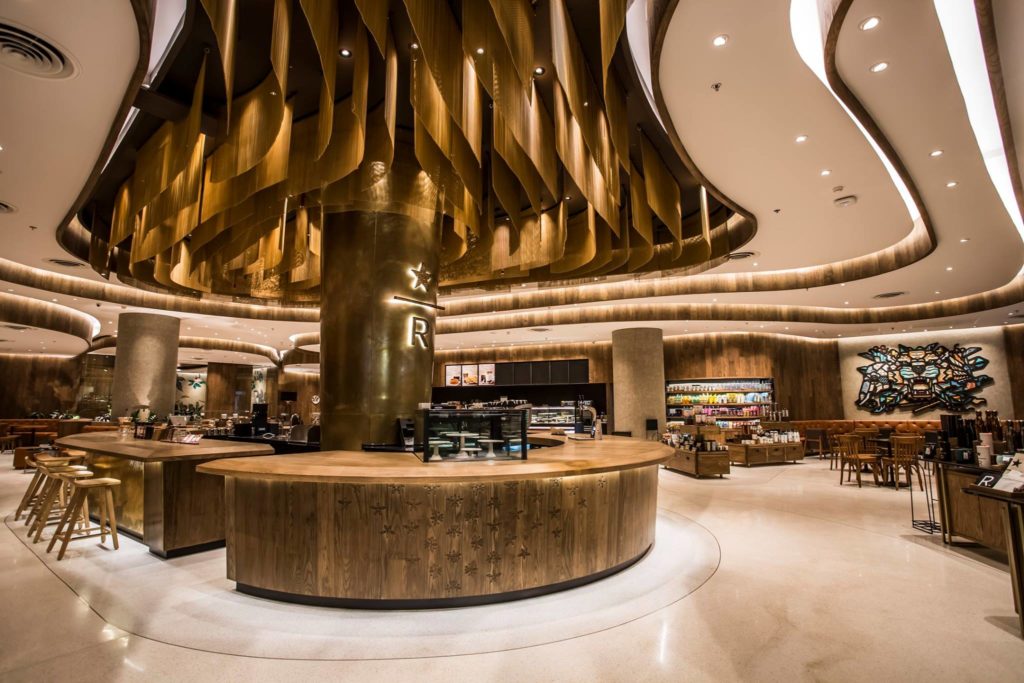
For more than two decades, the Starbucks brand has been a symbol of modern café culture. But as the company attempts a major reset in the United States—to “get back to basics,” simplify operations, and reignite sales—early signals show the transformation isn’t landing as intended. Meanwhile, across Thailand and much of Asia, Starbucks remains consistently full: a premium hangout, a quiet workspace, and a cultural ritual that still carries strong aspirational value.
Why is the brand struggling in its home market while thriving in Southeast Asia? The answer lies in consumer expectations, cultural differences, and the shifting identity of what Starbucks represents.
This divergence tells a bigger story about global brand adaptation—and why a “one-size-fits-all” model no longer works, even for one of the world’s most recognizable café chains.
1. The American Consumer Has Moved On
In the U.S., Starbucks isn’t struggling because its coffee became worse. It’s struggling because the context has changed.
Rising Prices, Shrinking Patience
U.S. consumers have become more cost-conscious, more time-conscious, and less tolerant of inconvenience. Starbucks’ drink customization—once a selling point—has become a pain point. Lines are longer. Orders are more complex. Labor shortages make things worse.
Even with the brand’s recent push to simplify operations and speed up service, the core problem remains: today’s American consumer expects seamless, mobile-first, hyper-efficient service. Competing formats like Dutch Bros, convenience-store coffee, and boutique cafés feel faster, cheaper, or more authentic.
The “Third Place” No Longer Fits American Lifestyles
Starbucks built its empire on the idea of the Third Place—a space between home and work. But in post-pandemic America, many people now:
- Work from home
- Prefer drive-thru formats
- Spend less time lingering in cafés
The romantic ideal of sitting in a café for hours with a laptop is no longer universal. Starbucks’ operations in the U.S. were built for a culture that no longer drives demand.
2. In Thailand, the Starbucks Brand Still Represents Lifestyle and Community
Contrast that with Thailand, where Starbucks remains one of the strongest international café brands. Despite premium pricing—often two to three times higher than local options—stores stay full from morning until night.
Why?
A Socially Acceptable “Third Place”
In Thailand, meeting outside the home is deeply cultural. Starbucks provides:
- Air-conditioning
- Reliable seating
- Electricity
- Perceived professionalism
It becomes a neutral meeting ground—for work, tutoring, dating, freelancers, remote workers, and small business owners.
While the U.S. has moved away from the Third Place, in Thailand it’s still thriving.
Premium Without Feeling Intimidating
Starbucks in Thailand offers a premium vibe without the formality of a sit-down restaurant. It’s casual but polished—a sweet spot in Asian café culture.
Local independent cafés offer creativity, but Starbucks offers consistency and status. This symbolism remains strong across Thailand, Vietnam, and Southeast Asia, where Western coffee culture still carries aspiration and lifestyle value.
Value Beyond the Beverage
Even though Starbucks is expensive for the Thai market, customers see the value in:
comfortable spaces
free Wi-Fi
predictable service
a place to “be seen” without judgment
The brand experience—not the latte—is the real product.
3. The U.S. Customer Wants “Personal,” While Asia Still Appreciates “Predictable”
A surprising shift has happened in the U.S.: consumers want indie, artisanal, and hyperlocal experiences—the opposite of Starbucks’ global uniformity.
In the U.S.
Consumers seek uniqueness, speed, and convenience. A homemade iced latte from a neighborhood coffee truck can be more appealing than a $7 Starbucks drink.
In Thailand
Customers value familiarity and an environment that balances premium and approachable. Starbucks nails that balance.
4. Starbucks’ New CEO Is Trying to Fix a U.S. Problem Asia Doesn’t Have
Starbucks’ new CEO, Laxman Narasimhan, is rolling out major changes to revive U.S. sales:
- Simplified drink processes
- Redesigned equipment
- Better drive-thru systems
- Renewed focus on customer experience
- New beverage concepts aimed at younger consumers
But the challenge is deeper than operational efficiency. The U.S. café market is saturated with options—from premium roasters to gas stations. Starbucks’ once-exciting novelty has reached maturity.
In Thailand, the brand still carries prestige and cultural relevance. In the U.S., Starbucks competes with everything and everyone.
A return to basics may not fix a market where the cultural desire for Starbucks has already shifted.
5. Culture, Not Coffee, Is the Real Divider
Starbucks’ biggest challenge isn’t product or price—it’s relevance.
In the U.S., Starbucks must negotiate a harder question:
“Why should I choose you today?”
In Thailand, the answer is embedded in daily behavior:
Because Starbucks is the perfect space for everything—work, study, meetings, and unwinding.
This cultural split illustrates a broader truth for global brands:
A brand succeeds when it fits the lifestyle of a culture—and fails when the lifestyle moves past it.
How Foundeast Helps Brands Navigate These Cultural Shifts
The Starbucks example highlights what we see across industries: global brands succeed or fail based on how well they understand local consumers. At Foundeast, this mindset is central to how we work. While we’re known for PR, communications, and branding, our impact goes far beyond visibility.
We help clients drive real business results by grounding strategies in data, behavior, and cultural nuance.
Our team regularly supports clients with market research, ethnographic studies, competitor mapping, and real-world consumer insight—because messaging alone can’t fix a product–market mismatch. We work with brands to identify cultural friction points, uncover what customers genuinely value, and recommend operational or experiential adjustments to unlock growth.
Whether it’s repositioning a café chain for Thai Gen Z, optimizing user journeys for a U.S.–Asia tech company, or aligning a global NGO’s content to local expectations, our role is to connect brand strategy with human behavior—so businesses can adapt and thrive.
Starbucks’ performance gap between the U.S. and Thailand is a reminder: brand success is built not just on storytelling, but on understanding what makes people tick in each market and meeting them where they are.
Starbucks’ Future Depends on Local Adaptation, Not Global Standardization
Starbucks’ U.S. pivot aims to solve a uniquely American issue—a decline in enthusiasm and a shift in café behavior. In Thailand and across Asia, the brand remains strong because it delivers exactly what the culture values: stability, comfort, community, and a premium experience.
Understanding culture isn’t optional—it’s the difference between a thriving brand and a struggling one.