
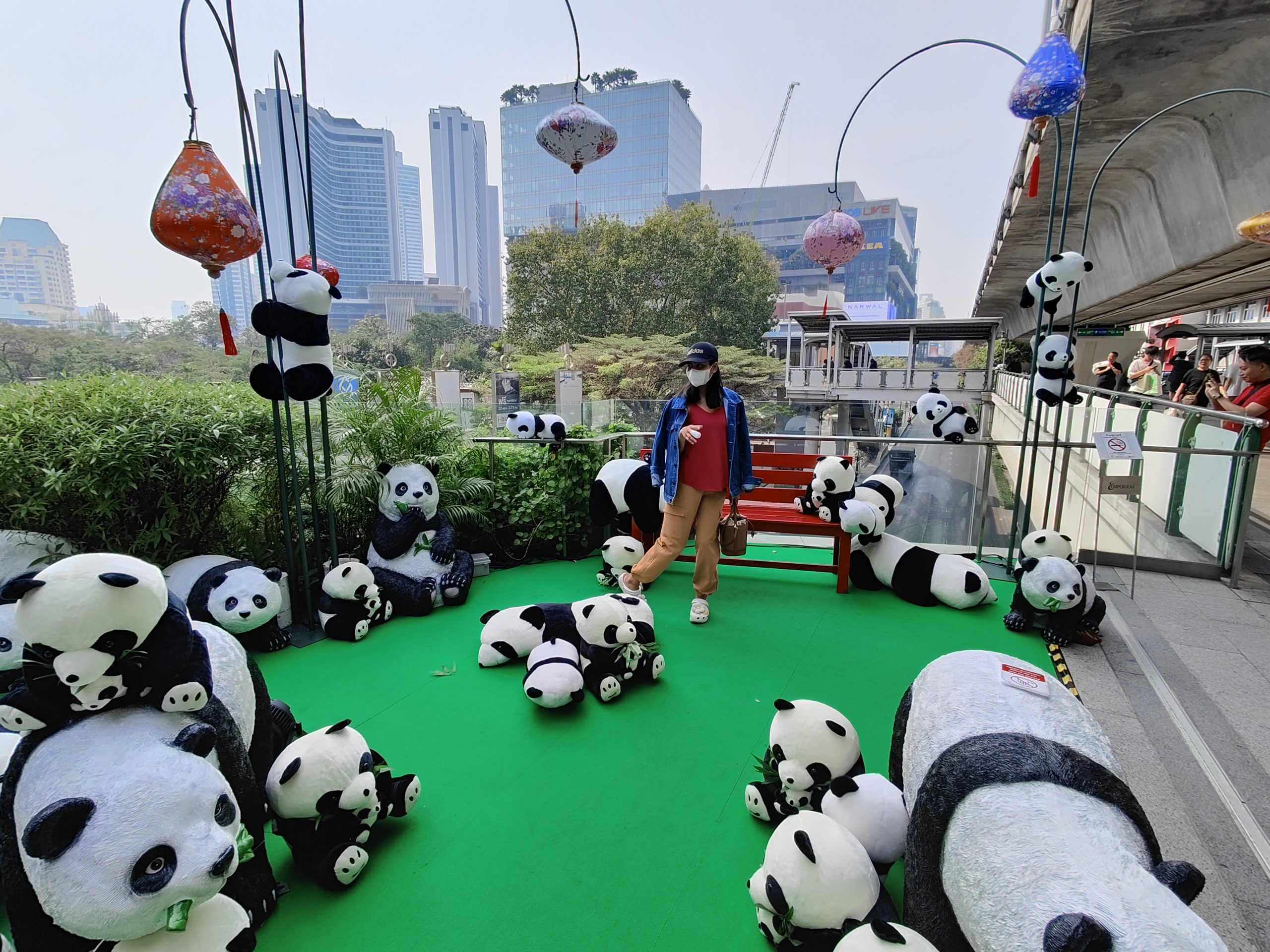
Brad Pitt’s character in F1 summed up the marketing challenge of our era in one memorable line: “It’s all noise.” For brands fighting to be heard in a world of constant notifications, algorithms, and polished but often distrusted narratives, the question is simple: how do you break through?
The answer increasingly lies in experiential marketing – immersive, tangible encounters that allow consumers to see, hear, and feel your brand in real life. In crowded urban environments like Bangkok, where millions of people move daily through public transport systems and high-density retail corridors, the opportunities for brand experiences have never been greater.
Trust: The Currency That Drives Purchase
The recent Experiential Marketing Impact Report (EMIR) from Spiro confirms what many marketers already suspect: trust is one of the strongest predictors of purchase. According to EMIR’s study of more than 2,000 consumers at live CPG and tech events:
- Over 90% of attendees who reported increased trust in a brand after an event went on to make a purchase.
- When trust didn’t increase, purchase intent dropped dramatically to just 34%.
That gap is enormous. Strategic experiential design – rooted in transparency, honesty, and relevance – directly builds trust. Attendees who described events as “transparent” and “real” reported a 91% purchase intent rate, nearly three times higher than neutral experiences.
Why Experiences Work When Digital Fatigues
McKinsey’s State of the Consumer 2025 report adds context: social media might drive discovery, but trust in it is vanishingly low. Thirty-six percent of US consumers and a staggering 56% of UK consumers cite it as their least trusted source for brand recommendations.
In a skeptical marketplace flooded with polished digital narratives, consumers crave proof points they can witness firsthand. They want to shake hands, try products, attend events, and see brands show up in their communities.
Experiential marketing delivers on that demand. It transforms abstract messaging into visceral moments – whether it’s a live demo, an immersive installation, or a simple but memorable face-to-face interaction.
Bangkok: A Living Laboratory for Experiential Marketing
Few cities illustrate the power of experiential opportunities better than Bangkok. With nearly 10 million residents and one of the fastest-growing urban cores in Southeast Asia, the city offers a high-density, high-visibility stage for brands ready to connect.
- Transit Signage: The BTS Skytrain and MRT subway systems carry millions of passengers daily. Branded takeovers of stations, escalators, and in-train media reach audiences in both transit and dwell time, embedding messages into the fabric of daily life.
- Digital Billboards: From the glowing canyons of Sukhumvit to the mega-screens of Siam, Bangkok’s digital signage landscape rivals Tokyo and New York. When paired with interactive or live experiential activations, these placements become more than impressions—they become invitations.
- Walkability and Urban Development: Bangkok is rapidly investing in more walkable, connected spaces. That means foot traffic is growing in districts like Phrom Phong, Asoke, and Ari. For brands, these concentrated zones offer perfect conditions for pop-ups, live demos, and street-level activations.
In this urban environment, physical scale amplifies brand trust. A campaign that begins with a digital billboard can drive audiences toward an on-the-ground experience—whether at a pop-up gym, a tasting booth, or a tech showcase. Each layer reinforces credibility.
Beyond Awareness: Building Loyalty
The genius of experiential marketing is that it doesn’t just cut through the noise; it sticks. Experiences are memorable because they engage multiple senses and emotions. A social media ad is seen for three seconds. A product sampling or live showcase can create a story that consumers retell for weeks.
More importantly, experiences generate earned media. Attendees share what they witness, amplifying trust through peer-to-peer validation. In Bangkok and across Asia, where influencer culture intersects deeply with consumer choices, experiential activations give influencers something authentic to showcase—turning brand moments into social proof.
From Global Insight to Local Execution
At Foundeast, we see this shift not as a passing trend but as a structural change in how brands must communicate. Asia’s urban centers—Bangkok, Ho Chi Minh City, Singapore—are uniquely positioned for this evolution:
- Dense populations mean scale. One station activation can reach millions.
- Cultural openness to innovation means receptivity. Consumers in the region embrace novelty, from new dining concepts to tech try-outs.
- Blended digital-physical lifestyles mean synergy. Experiences don’t replace digital—they elevate it. A live activation creates the content that fuels TikTok, Instagram, and LinkedIn.
Cutting Through the Noise, Building the Future
In a world where consumers tune out endless advertising streams, the brands that will thrive are the ones that show up in real life.
In Bangkok’s vibrant streets and transport corridors, the opportunity to engage millions isn’t theoretical—it’s happening every day. The question is whether brands will seize the moment.
From digital-transit integrations to high-impact live activations, Foundeast knows how to transform crowded marketplaces into stages where your brand earns not just attention, but trust.